Governor Eduardo Riedel, candidate for re‑election, said the high rent and the pressure on health services and traffic in Três Lagoas are effects of the economic growth driven by the Vale da Celulose. In an interview with Massa FM, he called the situation a “good problem” compared with a recession scenario.
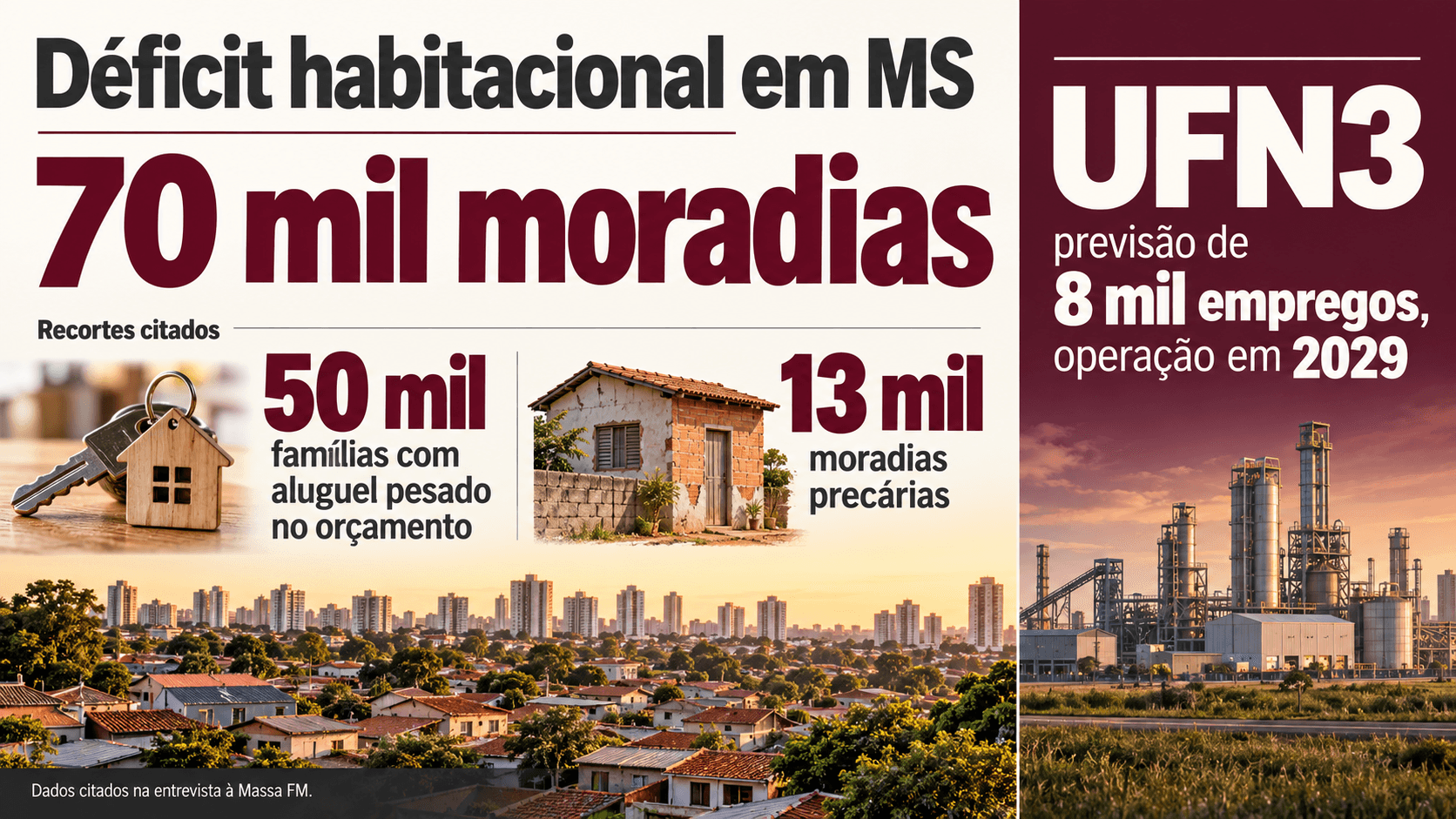
Riedel noted that rent is high across Mato Grosso do Sul because of competition for properties. The state faces a deficit of 70 000 housing units, of which 50 000 families allocate an excessive share of their income to rent and about 13 000 live in precarious conditions. The shortage translates into a monthly rent burden that exceeds 30 % of household income for many families.
To alleviate the pressure, the governor mentioned the construction of low‑income housing and the “Bônus Moradia” incentive that offers tax benefits to developers who allocate a percentage of units to families earning up to three minimum wages. He also highlighted professional courses aimed at logistics, agribusiness and construction, the new regional hospital and investments in roads, a railway concession and a hydro‑waterway.
The administration also addressed the expected reopening of the UFN3 fertilizer plant by Petrobras. The federal project foresees around 8 000 jobs in construction and operation, with the plant scheduled to start in 2029, and will be built on the outskirts of Três Lagoas, boosting the regional supply chain for soybean producers.
Habitação e emprego
Riedel said the state’s role is to qualify workers and require contracting companies to prioritize local labor, a practice already in place in the negotiations for UFN3. He added that unemployment in Mato Grosso do Sul is below 3 %, the lowest level recorded in the state’s history, and that the Fundação do Trabalho, together with government‑funded partners, is active in training programs. The qualification plan includes partnerships with technical schools and the Federal Institute, aiming to certify at least 5 000 workers before the plant becomes operational.
The governor concluded that, while the rent increase reflects a booming economy, the government will continue to expand affordable housing, maintain the Bônus Moradia and monitor rent trends through a quarterly report, adjusting the incentive if inflation erodes affordability. The measures aim to ensure that the benefits reach the population of Três Lagoas and the wider state.